

Keynote Speakers 主旨报告嘉宾
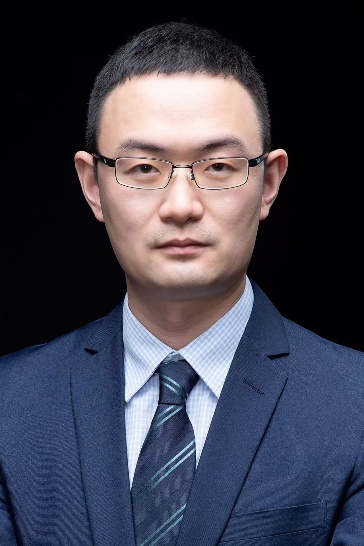
Prof. Jie Xu · 许杰
The Chinese University of Hong Kong (Shenzhen), China
Biography
Jie Xu (Fellow, IEEE) is currently a Professor with The Chinese University of Hong Kong (Shenzhen). His research interests include wireless communications, sensing, and AI. He was a recipient of the 2026 IEEE Communications Society Fred W. Ellersick Paper Award, the 2026 IEEE Jack Neubauer Memorial Award, the 2017 IEEE Signal Processing Society Young Author Best Paper Award, the 2019 IEEE Communications Society Asia-Pacific Outstanding Young Researcher Award, and the 2019 Wireless Communications Technical Committee Outstanding Young Researcher Award. He is the Chair of the IEEE Wireless Communications Technical Committee (WTC). He served or is serving as an Associate Editor-in-Chief of the IEEE Transactions on Mobile Computing, an Editor of the IEEE Transactions on Wireless Communications, IEEE Transactions on Communications, and IEEE Wireless Communications Letters. He is a Clarivate Highly Cited Researcher and a Distinguished Lecturer of IEEE Communications Society.
Speech Title
Exploiting LLM Agents for Trustworthy AutoResearch in Wireless Communications
Abstract
Large language model (LLM) agents capable of planning, code generation, tool use, and iterative revision are enabling automated scientific research. Wireless communications is especially suited to this paradigm, given its mature mathematical, simulation, and optimization toolchains—but integrating autonomous agents into rigorous workflows requires traceable processes and verifiable evidence. This talk presents WARA, a closed-loop multi-agent framework for end-to-end trustworthy wireless AutoResearch, focused on resource allocation optimization. Given only an initial research topic, WARA decomposes the workflow into three phases: research gap identification, optimization modeling and algorithm design with experimentation, and construction of research deliverables. Trustworthiness is enforced via typed research contracts, version-controlled artifacts, independent validators, bounded agent authority, and controller-managed validation gates, enabling targeted artifact repair rather than full workflow restarts. Case studies on wireless resource allocation and UAV integrated sensing and communication (ISAC) show WARA substantially outperforms one-shot LLM generation and approaches the quality of peer-reviewed papers, demonstrating closed-loop artifact control as a promising path toward reliable LLM-assisted wireless research.
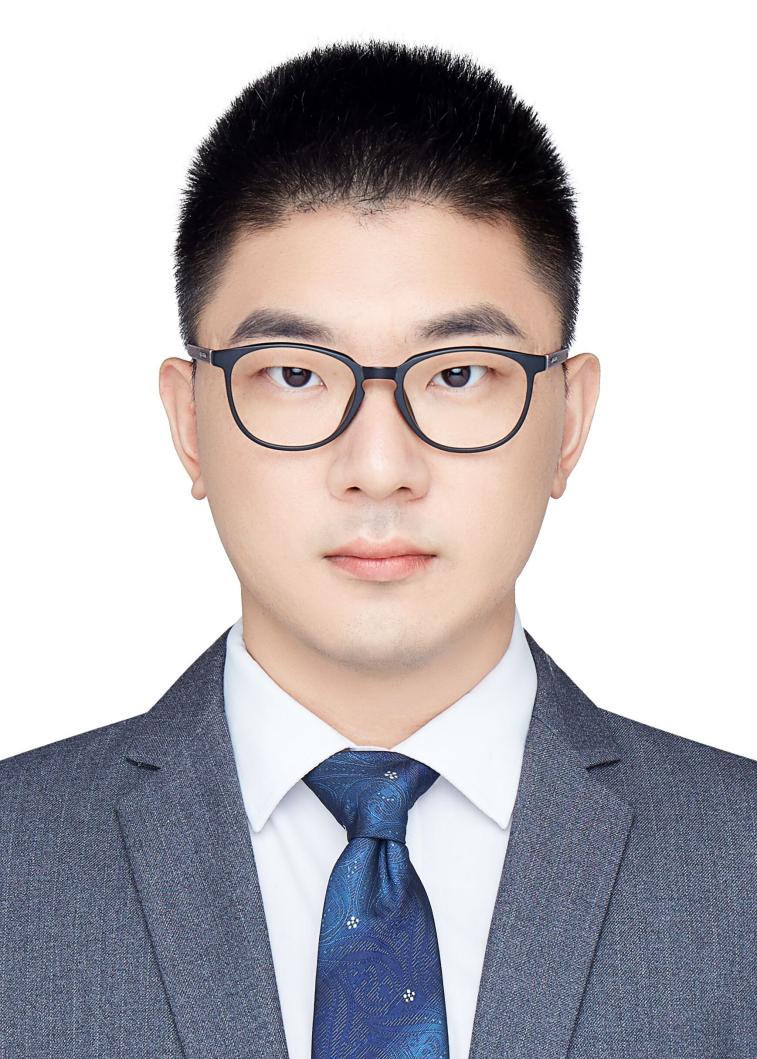
Prof. Zhaolong Ning · 宁兆龙
Chongqing University of Posts and Telecommunications, China
Biography
Zhaolong Ning received the Ph.D. degree from Northeastern University, China in 2014. He was a Research Fellow at Kyushu University from 2013 to 2014, Japan. Currently, he is a full professor and dean with the School of Communication and Information Engineering, the Chongqing University of Posts and Telecommunications, Chongqing, China. His research interests include mobile edge computing, 6G networks, and resource management. He has published over 200 scientific papers in international journals and conferences. Dr. Ning serves as an associate editor or guest editor of several journals, such as IEEE Transactions on Cloud Computing, IEEE Transactions on Vehicular Technology, IEEE Transactions on Industrial Informatics, IEEE Transactions on Social Computational Systems and so on. He is a Highly Cited Researcher (Web of Science) since 2020. He is a Fellow of the IET.
Speech Title
Secure Communication and Network Optimization for Low-altitude Unmanned Aerial Vehicles
Abstract
This talk addresses the requirements of mobile networking, controllable propagation, and secure transmission for low-altitude UAV networks. It elaborates on the research progress in secure communication and network optimization for low-altitude UAVs. The content includes three research focuses: robust anti-jamming communication for UAV swarms, robust secure communication for multi-user and multi-eavesdropper scenarios, and buffer-aided UAV relaying for covert transmission. Finally, it introduces the established air-ground emergency communication support system.
Prof. Hongbo Liu
Biography
Hongbo Liu is a Professor and Ph.D. supervisor, and a recipient of a national-level talent program for young scholars. He earned his Ph.D. in Electrical Engineering from Stevens Institute of Technology in 2013, under the supervision of Professor Yingying Chen (an ACM Fellow, IEEE Fellow, and NAI Fellow). He subsequently served as an Assistant Professor and later an Associate Professor at Indiana University–Purdue University Indianapolis (IUPUI). His research focuses on fundamental and applied studies in wireless physical-layer security, intelligent sensing and computing, and data security and privacy protection. He has published over 100 papers in top-tier international journals and conferences, including ACM MobiCom, IMWUT, IEEE INFOCOM, IEEE TDSC, TMC, and etc. He has received Best Paper awards at ACM MobiCom 2011, IEEE CNS 2013 & 2018, and IEEE MASS 2023.
Speech Title
Proactive Channel Reshaping for High-Rate and Controllable Physical-Layer Key Generation
Abstract
Physical-layer key generation (PLKG) offers a promising paradigm for wireless security by exploiting channel reciprocity and spatial decorrelation. However, conventional schemes rely on passively harvesting randomness from raw channel measurements, leaving them constrained by unpredictable channel dynamics and tradeoffs among key generation rate, agreement, and secrecy. This keynote explores a shift from passive extraction to proactive channel feature reshaping: actively structuring how wireless channel features are observed and used for key establishment. We recent report two approaches spanning the signal and algebraic domains: (2) We reshapes channel phase observations through symmetric pilot manipulation, creating well-separated quantization regions that improve sample utilization and key agreement while maintaining reliable data decoding; (2) we combine ring-structured convolution with modular channel masking to encapsulate independently generated keys, enabling efficient recovery and rigorous bounds on information leakage. Drawing on theoretical analysis, simulations, and wireless testbed measurements, we demonstrate how proactive design enhances the rate, reliability, and controllability of physical-layer key generation.